Microcement at Pico X
Microcement Singapore — Walls, Floors & Bathrooms
How much does microcement cost in Singapore?
Microcement starts from S$788 for a feature wall, S$2,800 for microcement-look SPC flooring in a 3-room HDB, and S$3,288 for full-plaster bathrooms. Pico X Health installs 2–3mm hand-trowelled microcement on walls and wet rooms, plus waterproof click-lock SPC planks for dry areas, from S$7,500.
Microcement, finished to architectural digest.
Hand-trowelled microcement plaster on a feature wall, microcement-look SPC vinyl plank across the floor, or a full full-plaster wet-room. Installed under Pico X Health by our in-house Pico X Health crew. — supervised, sealed, warranted.
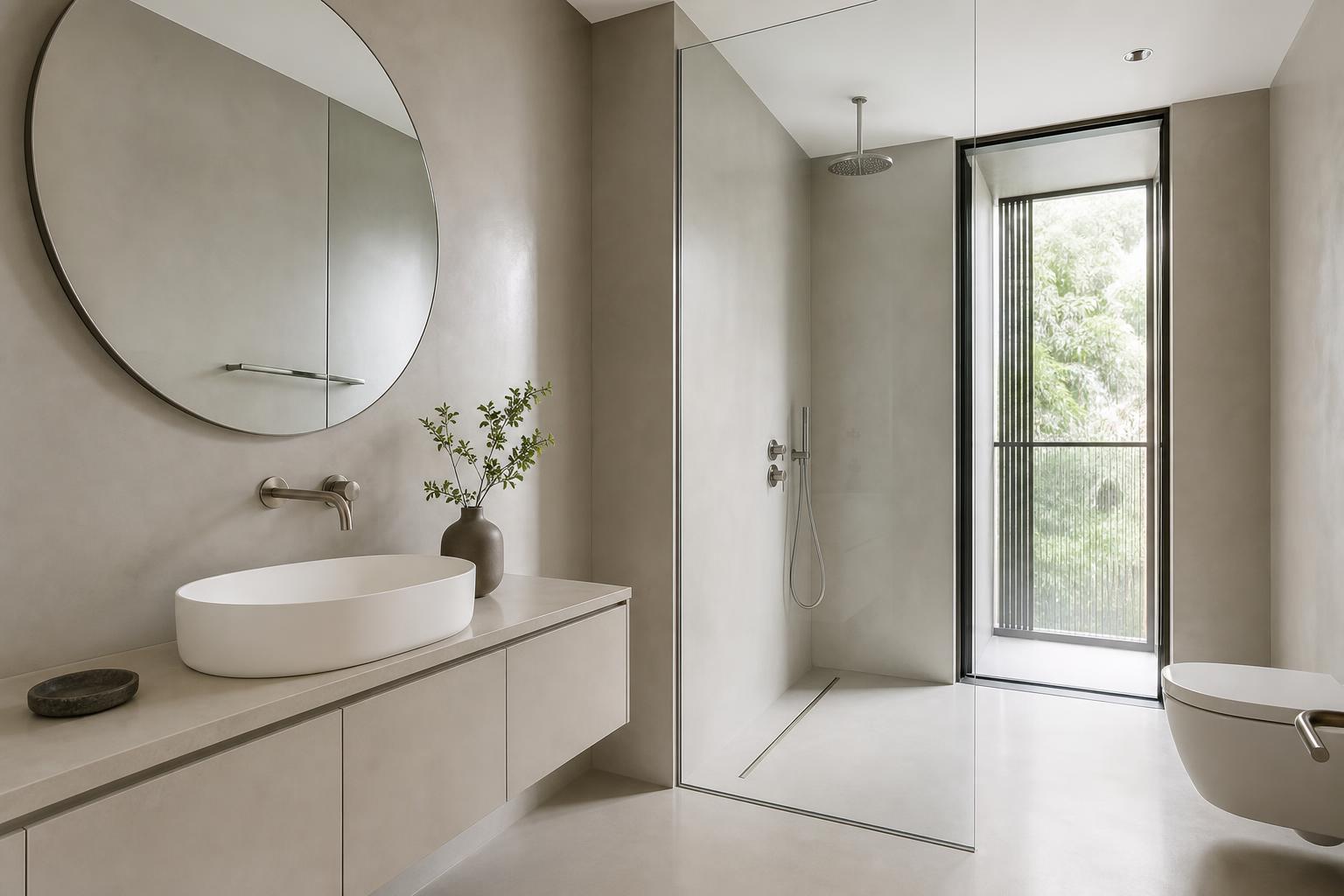
What microcement is — two surfaces, one aesthetic
Microcement is a 2–3mm hand-trowelled mineral plaster. It bonds directly onto plaster walls, kitchen splashbacks, even existing tile. The result is a continuous, seamless surface with subtle hand-laid variation — the look that's been driving Singapore reno boards for two years.
The floor pair is our microcement-look SPC vinyl plank — eight cream tones engineered to match the wall plaster. It's waterproof, click-lock, and floats over your existing tile in 1–2 days.
What microcement costs in Singapore
| Scope | Price | Working days |
|---|---|---|
| Microcement feature wall (TV wall, bedhead, splashback) | From $788 | 3–4 |
| Full-plaster bathroom (walls + floor) | From $3,288 | ~9 |
| Microcement-look SPC flooring, 3-room HDB | From $2,800 | 1–2 |
| Whole-unit package (walls + wet-room + SPC floors) | From $7,500 | 10–14 |
Prices are fixed-quote after a site check and include surface prep, mesh reinforcement, sealer and workmanship warranty. The full room-by-room breakdown — including condo and landed scopes — sits on the microcement cost guide for 2026.
Where microcement can be installed
- Microcement feature walls. TV walls, bedhead walls, kitchen splashbacks. From $788.
- SPC flooring. Living, dining, bedrooms — across the whole unit. From $2,800 (3-room HDB).
- Full-plaster bathrooms. Microcement plaster walls + microcement plaster floor. From $3,288.
- Whole-unit packages. Walls + bathroom + SPC dry-area floor for HDB and BTO. From $7,500.
Best combination for most homeowners: SPC microcement-vinyl on dry-area floors + authentic microcement plaster on the feature wall. Same monolithic cement aesthetic at standing eye height, a fraction of the cost, and almost no ongoing floor maintenance.
Which substrates microcement bonds to
| Substrate | Suitable | Prep required |
|---|---|---|
| HDB skim-coat plaster wall | Yes | Sand, prime, mesh layer |
| Existing wall or floor tile | Yes | Degrease, bonding primer, mesh |
| Plasterboard / drywall partition | Yes | Joint tape, prime, mesh |
| Cement screed floor | Yes | Level to spec, prime — see screed vs microcement |
| Timber or flexing substrate | Not recommended | Movement causes hairline cracking |
| Damp or spalling concrete | Not until treated | Moisture source must be fixed first |
Microcement flooring vs SPC vinyl
Authentic microcement flooring is poured, trowelled and sealed in place — seamless, but it cures over several days and repairs mean re-skimming a whole plane. Microcement-look SPC vinyl is a 5mm rigid-core click-lock plank with a 0.5mm wear layer: same cream cement tones, walkable the same day, and a damaged plank lifts out individually.
For dry areas — living, dining, bedrooms — SPC wins on cost, speed and repairability. For wet zones we specify authentic plaster, because click-lock seams are not designed to sit under standing water. The head-to-head is on microcement vs vinyl.
Microcement for HDB and BTO homes
Both systems are non-structural: the plaster is 2–3mm on the existing wall, and the SPC planks float over your existing tile or screed. That keeps them within HDB renovation rules when installed by a registered renovator, with no hacking and no wet-work permits for dry-area floors. Timelines, permit notes and per-unit pricing are on the microcement for HDB & BTO page.
Maintenance, durability and repairs
Sealed microcement takes normal household traffic for years. Day-to-day care is a damp microfibre mop and a pH-neutral cleaner — no bleach, no abrasive scouring pads, no steam mops, all of which attack the polyurethane topcoat rather than the cement itself.
- Re-sealing. Wall plaster typically needs no re-seal; heavy-use floors and shower zones benefit from a topcoat refresh every 4–6 years.
- Stains. Sealed surfaces resist coffee, soap and shampoo. Wipe acidic spills (lemon, descaler) promptly — they can dull the sealer sheen.
- Repairs. A chip in plaster is patched and the affected wall plane re-sealed so the finish reads continuous. A damaged SPC plank is simply swapped.
- Cracking. Hairline cracking traces back to substrate movement, not the product — which is why every wall and floor we install carries a fibreglass mesh layer.
Installed under our name
We sub-contract installation to Pico X Health — a registered renovator with the BCA / HDB licences microcement work needs. Project management, design supervision, payment, and warranty all sit with Pico X Health. You deal with one team.

Microcement FAQs
Is microcement waterproof?
Microcement plaster is water-resistant when sealed with the correct polyurethane topcoat. For wet zones (shower floors, splashbacks) we apply two sealer layers and use authentic microcement plaster on the floor too — SPC click-lock seams are not specified for wet areas.
Will microcement crack in a Singapore HDB flat?
Hairline cracks are rare when the substrate is prepped correctly and the system uses a fibreglass mesh layer. Our Pico X Health install partner uses a mesh-reinforced system on every wall and floor.
How long does microcement installation take?
A feature wall: 3–4 working days including cure. A full-plaster bathroom (walls + floor): ~9 working days. Full-unit SPC microcement-vinyl flooring: 1–2 working days.
Can I get the microcement look for less?
Yes — our SPC microcement-vinyl plank gives the same cream tones at a fraction of the cost. See the SPC flooring page for specs.
Can microcement go over existing tiles?
Yes. Tile is one of the most common substrates in Singapore. We degrease, apply a bonding primer, bridge the grout lines with mesh, then build the plaster layers — no hacking, no debris disposal, no reinstatement of skirting.
Does microcement need to be re-sealed?
Wall plaster generally does not within its service life. Floors and shower zones see far more abrasion, so we recommend a topcoat refresh every 4–6 years to keep the sheen and water resistance even.
Is microcement more expensive than tiling?
On walls it is usually comparable once tile hacking, disposal and grouting labour are counted. On floors, microcement-look SPC is normally cheaper than tiling, and authentic microcement flooring sits above it because of the layered hand application and cure time.